
Custom caps are an excellent way to showcase your brand, but choosing between embroidery and printing can be confusing. Which is better for your business needs?
Embroidery is ideal for durable, premium designs, while printing excels at affordability and vibrant, detailed graphics. Both methods suit different goals, budgets, and fabric types.
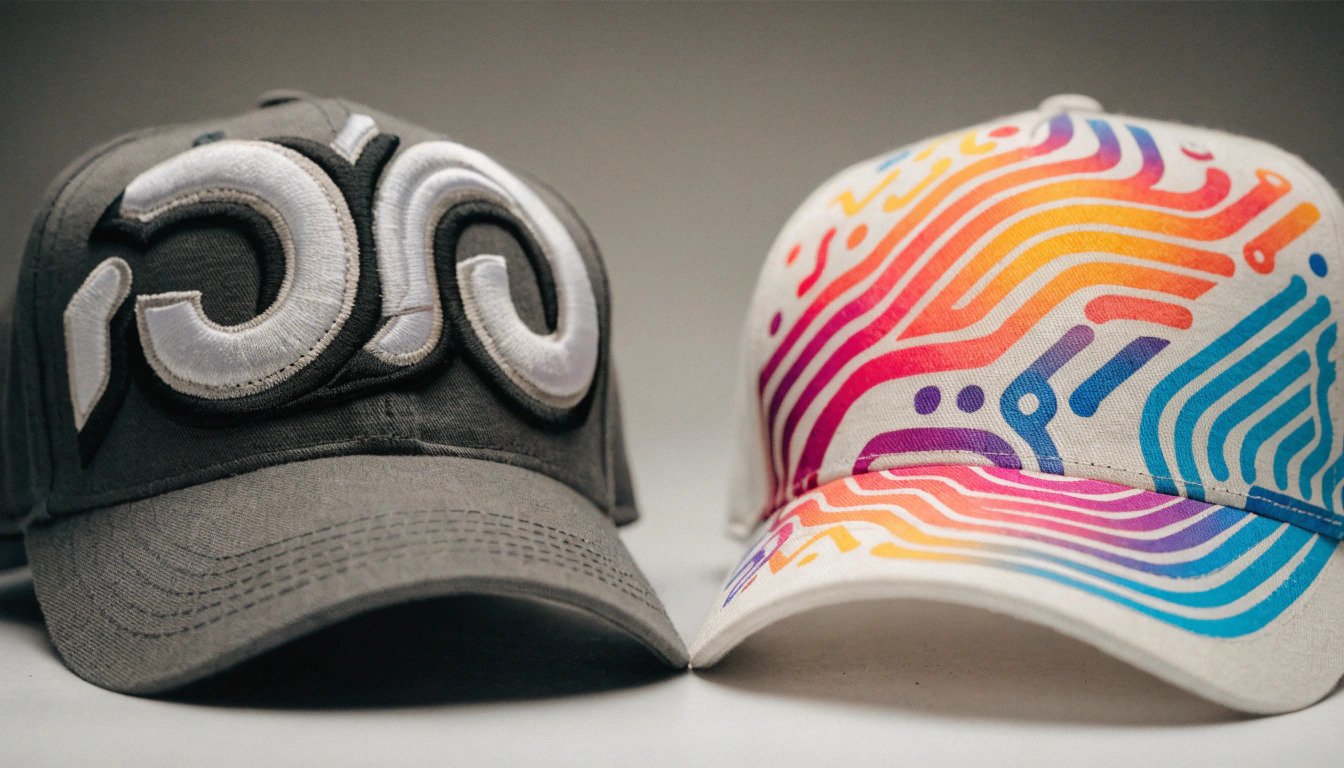
Both techniques have their strengths and weaknesses. Let’s explore the details to help you make an informed decision.
Compare durability, cost, appearance, and best-use scenarios to choose the right customization method for your brand.
Customizing caps involves balancing aesthetics, functionality, and cost. Each method—embroidery and printing—offers unique advantages. Which one delivers the best result for your brand identity?
Embroidery lasts longer due to stitched designs that withstand wear and washing, while printing allows detailed, colorful logos at a lower price.[^1] The choice depends on priorities.
Dive deeper: Comparing durability and cost
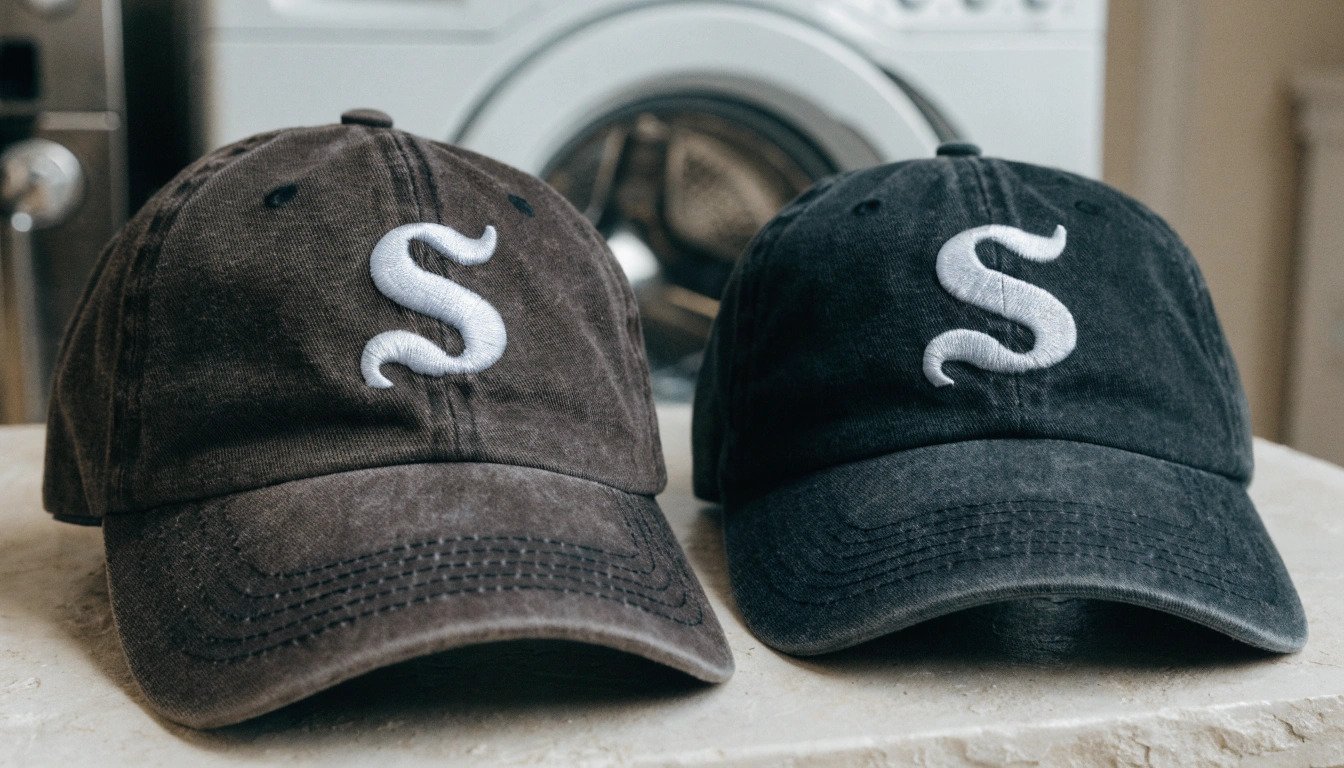
Embroidery uses thread to create raised designs, which maintain their look over time.[^2] This makes it ideal for sports teams or workwear. Printing, especially screen printing or heat transfer, can fade faster but offers a lower upfront cost, making it great for promotional events.
| Criteria | Embroidery | Printing |
|---|---|---|
| Durability | High (Resists fading/washing) | Medium (Fades over time) |
| Cost | Higher per unit | Lower per unit |
| Appearance | Premium, textured look | Vibrant, flat designs |
| Best Use | Long-lasting branding | Temporary or colorful designs |
Learn the pros and cons of embroidery and printing on custom caps for promotional, retail, sports, and fashion collections.
Every industry has unique requirements. For example, retail brands may prioritize aesthetics, while sports teams need durability.
Embroidery works well for professional branding and athletic wear, while printing suits fashion-forward designs and promotional giveaways.

Dive deeper: Pros and cons for different collections
Promotional events benefit from printing due to its affordability and ability to showcase complex designs.[^3] Retail and fashion brands often prefer embroidery for its premium look and longevity, lending a sense of exclusivity.[^4]
| Collection Type | Embroidery Advantage | Printing Advantage |
|---|---|---|
| Promotional | Professional branding | Cost-effective designs |
| Retail | Premium, textured look | Variety in graphics |
| Sports | Durable, washable designs | Affordable bulk options |
| Fashion | Exclusive, upscale feel | Vibrant, trendy visuals |
Discover which logo decoration technique delivers better quality, faster production, and higher customer satisfaction.
Whether you are ordering a few caps or thousands, production speed and quality matter. Which method fits your timeline and guarantees customer satisfaction?
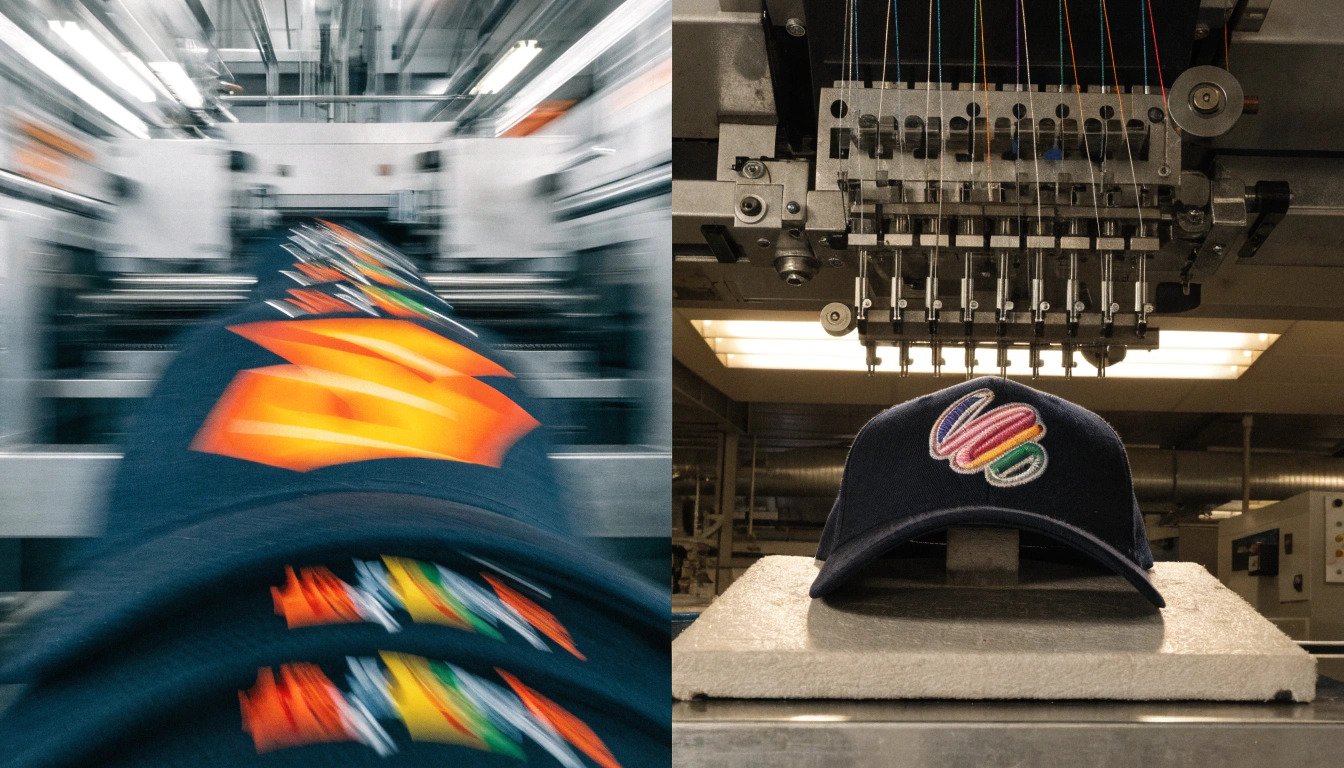
Printing offers faster turnaround for large orders, while embroidery provides precise, high-quality results for smaller runs or high-value items.
Dive deeper: Quality and production speed
Embroidery generally takes longer due to its intricate stitching process, but the results are worth it for smaller, high-end orders.[^5] Printing is faster and better suited for quick-turnaround bulk orders.
| Factor | Embroidery | Printing |
|---|---|---|
| Quality | High | Medium |
| Production Speed | Slower | Faster |
| Customer Satisfaction | Premium feel | Affordable options |
From startup brands to bulk buyers, explore how embroidery and printing affect pricing, lead time, and product value.
For startups, cost is often a key concern. Bulk buyers, on the other hand, may prioritize efficiency. Both embroidery and printing cater to different needs.
Embroidery adds value with its premium design but costs more, while printing keeps initial investment low and scales well for large orders.
Dive deeper: Pricing and lead time for startups and bulk buyers
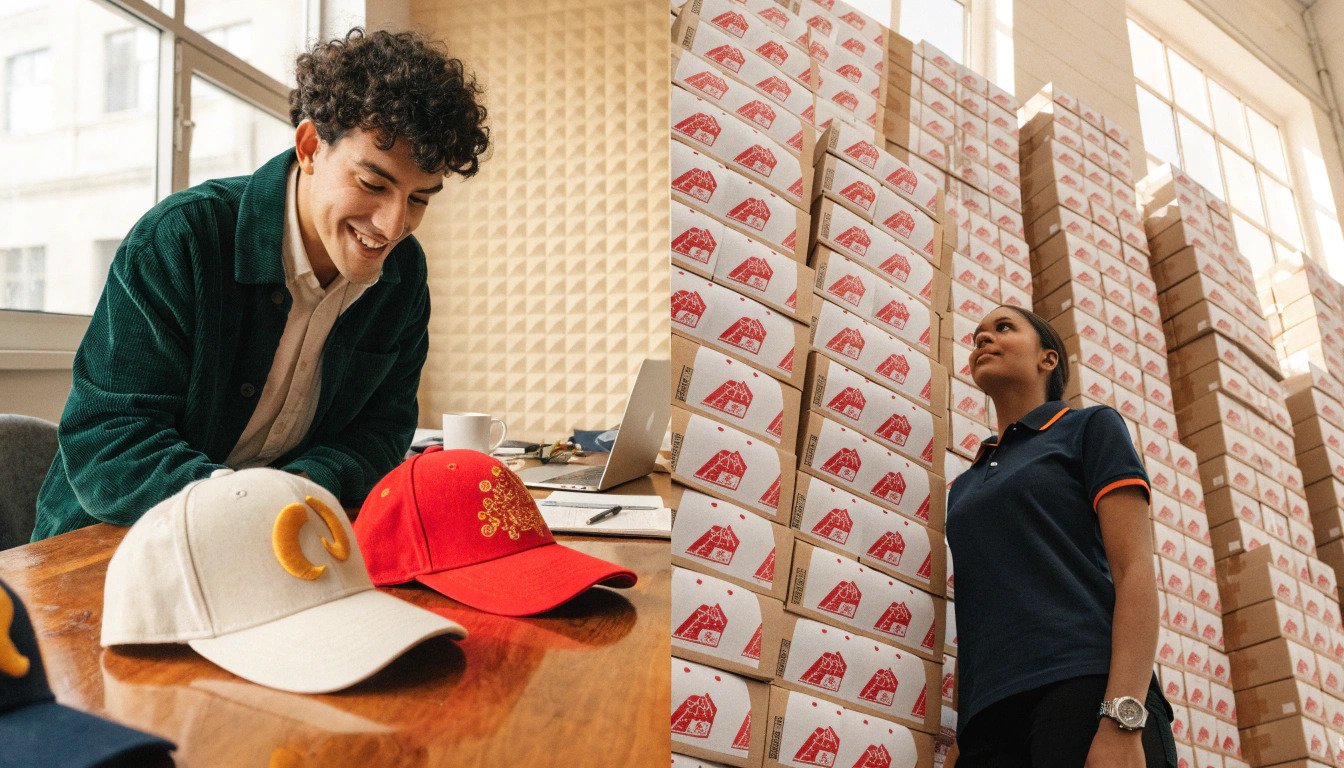
Startups can leverage printing for affordability, especially when testing the waters with merchandise. Bulk buyers often benefit from printing's faster lead times, while embroidery can add perceived value to smaller high-margin collections.
| Buyer Type | Embroidery Benefit | Printing Benefit |
|---|---|---|
| Startups | Builds brand exclusivity | Cost-effective entry |
| Bulk Buyers | High perceived value | Scales efficiently |
Use this practical guide to select the ideal logo application based on fabric type, design complexity, and order quantity.
Fabric type and design complexity play a significant role in choosing between embroidery and printing. So does the size of your order.
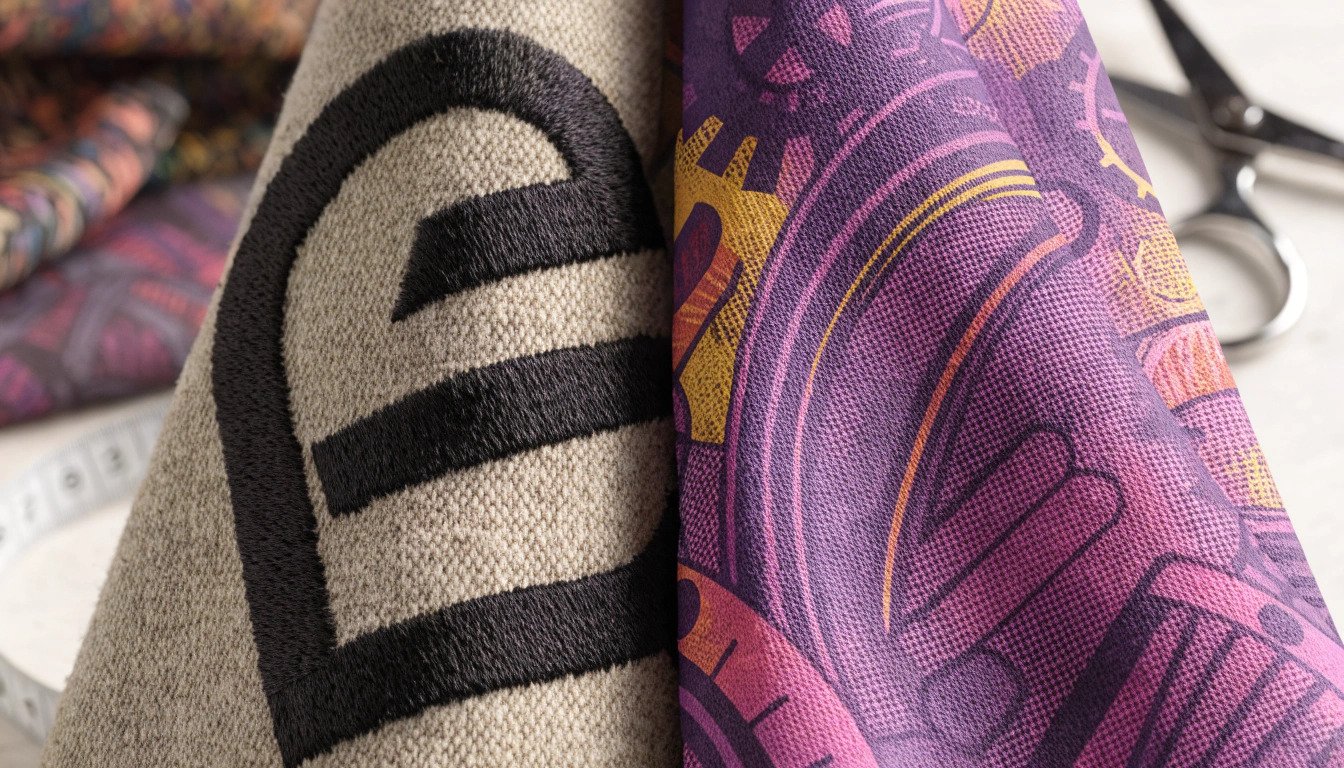
Embroidery is compatible with thicker fabrics and simpler designs. Printing adapts well to thin fabrics and intricate, colorful graphics.
Dive deeper: Practical considerations based on fabric and design
Embroidery works well on sturdy materials like cotton, denim, or twill. It struggles with delicate fabrics. Printing, especially sublimation, excels on lightweight materials and allows for photorealistic designs.[^6] Matching the method to the fabric and order size ensures optimal results.
| Consideration | Embroidery | Printing |
|---|---|---|
| Fabric Type | Thick fabrics, textured | Thin fabrics, smooth |
| Design Complexity | Simple, bold logos | Detailed, colorful graphics |
| Order Quantity | Smaller, high-value runs | Large-scale production |
Conclusion
Choose embroidery for premium, durable branding or printing for affordable, vibrant designs. Match the method to your needs based on fabric, design, and order size.